


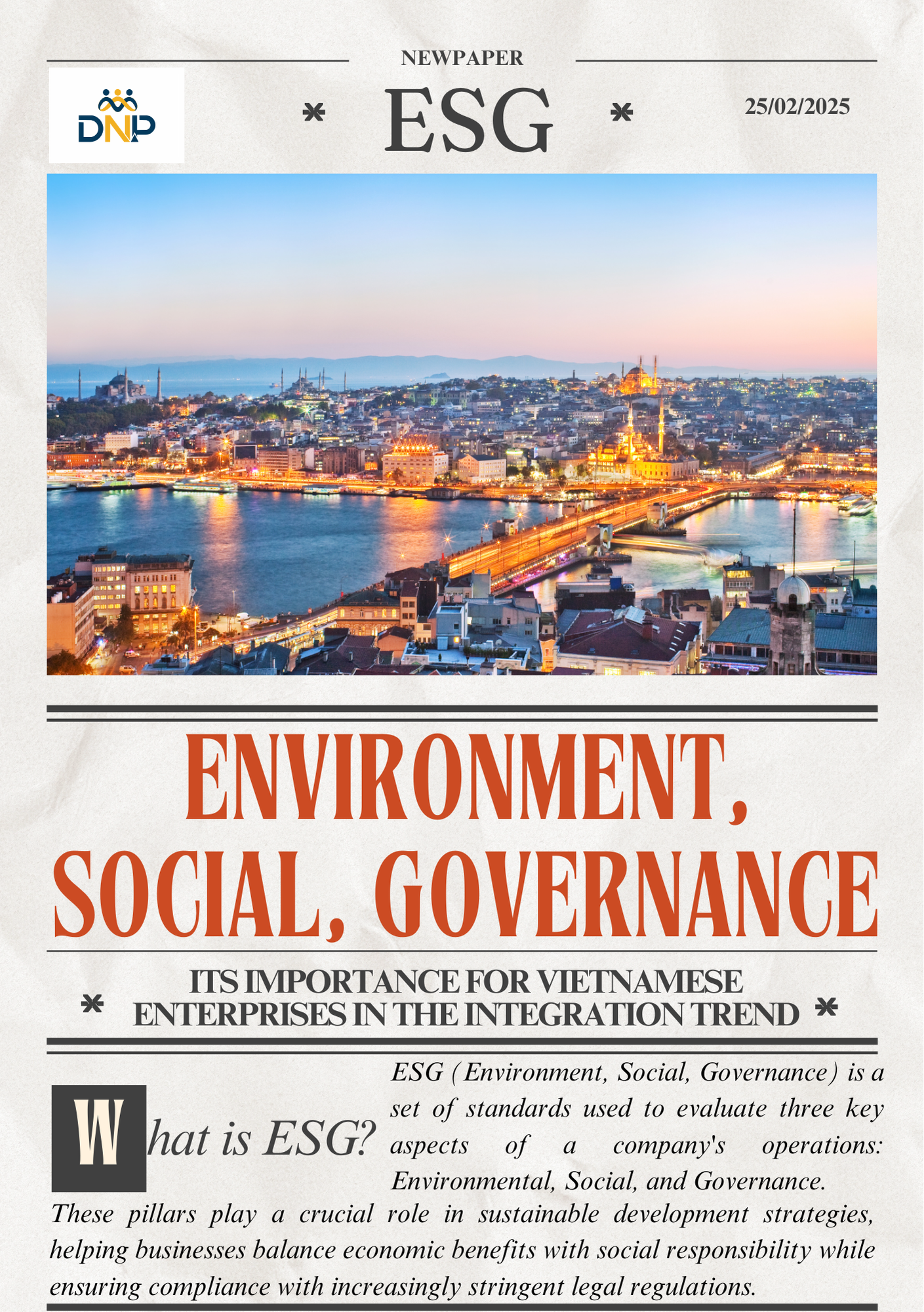
Discover the crucial role of ESG in helping Vietnamese businesses thrive in the global integration trend, driving sustainability, competitiveness, and long-term success.
1. Concept of ESG
ESG (Environment, Social, Governance) is a set of standards used to evaluate three key factors in business operations: Environment, Social, and Governance. These are crucial pillars in sustainable development strategies, helping businesses balance economic benefits with social responsibility while complying with increasingly stringent legal regulations.
2. ESG Evaluation Criteria
2.1. Environment (E):
- Compliance with environmental protection laws.
- Reducing greenhouse gas emissions, using renewable energy, and managing waste and resources efficiently.
- Implementing a circular economy model to recycle and reuse materials.
2.2. Social (S):
- Ensuring labor rights, workplace safety, and gender equality.
- Creating a fair, diverse, and inclusive working environment.
- Participating in social responsibility initiatives and community support programs.
2.3. Governance (G):
- Transparency in corporate governance, ensuring shareholder rights.
- Establishing a clear organizational structure and effective risk management.
- Adhering to ethical business standards and anti-corruption practices.
3. The Role of ESG in Businesses
- Environment: Minimizing negative environmental impacts, promoting renewable energy use, and ensuring sustainable resource management.
- Social: Enhancing corporate reputation and strengthening employee and community engagement.
- Governance: Improving corporate credibility, attracting investment, and reducing legal risks.
4. ESG Trends and Current Status in Vietnam
Vietnam is actively implementing international ESG commitments, particularly after COP26, with a goal of achieving net-zero emissions by 2050.
Major corporations such as Vinamilk and FPT have successfully integrated ESG strategies, focusing on sustainability and social responsibility.
- According to surveys, 44% of listed companies in Vietnam have implemented ESG plans, while 36% are in the planning stage.
Image is designed by DNP Viet Nam Law Firm
5. Steps to Implement ESG in Businesses
Step 1: Assess the current ESG status of the company.
Step 2: Choose an appropriate ESG reporting framework (GRI, SASB, IFRS).
Step 3: Define specific and measurable ESG goals.
Step 4: Develop a strategic plan and assign responsibilities.
Step 5: Implement, monitor, and report progress periodically.
6. Benefits of ESG Implementation
- Attracting Investment: Investors are increasingly interested in companies with high ESG ratings.
- Cost Reduction: Optimizing energy and resource use helps lower operational expenses.
- Reputation Enhancement: Builds a responsible corporate image, increasing customer and partner trust.
- Sustainable Development: Establishes a solid foundation for long-term growth while mitigating legal and environmental risks.
ESG is not just a legal requirement but also a strategic factor that helps businesses achieve sustainable development, enhance competitiveness, and meet stakeholder expectations. A well-structured and transparent ESG approach will yield long-term economic benefits while contributing to societal and environmental progress.
For any inquiries or specific adjustments, please feel free to contact us. Thank you, and we look forward to collaborating!
————————————————————————
DNP VIETNAM LAW FIRM
- Address: 5th Floor, No. 52 Nguyen Thi Nhung Street, Van Phuc Urban Area, Hiep Binh Phuoc Ward, Thu Duc City, Ho Chi Minh City, Vietnam.
- Hotline: 0987.290.273
- Email: info@dnp-law.com
- Website: https://www.dnp-law.com/

