


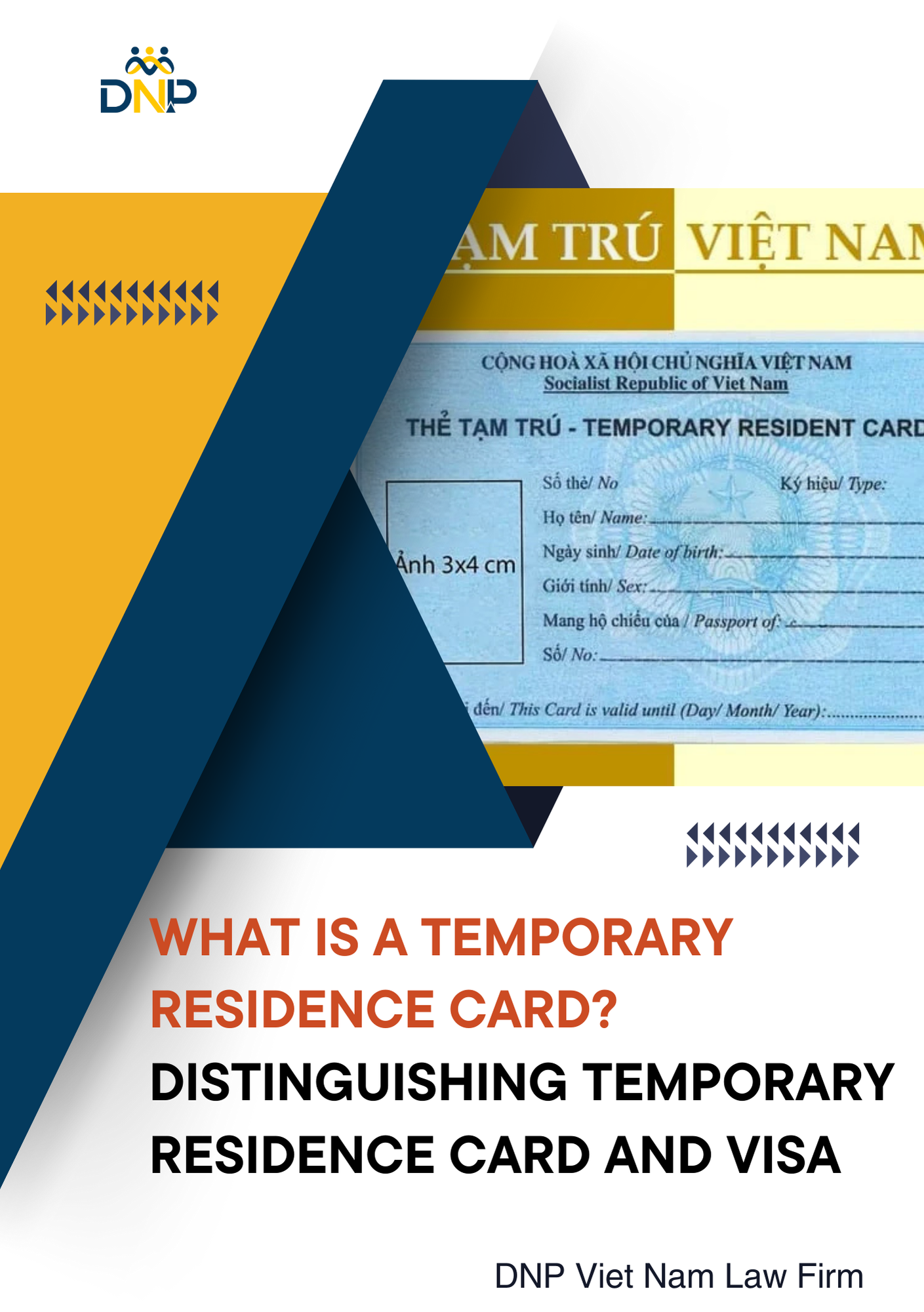
In Vietnam’s immigration context, both visas and Temporary Residence Cards are important documents that allow foreigners to enter and stay in the country legally. However, each type of document has its own characteristics and regulations. Understanding what a Temporary Residence Card is and knowing how to distinguish a TRC vs a visa will help foreigners and businesses hiring foreigners comply with the law and choose the appropriate document for their needs.
1. What is Temporary Residence Card (TRC)?
Legal Basis: Clause 13 Article 3 of the Law on Entry, Exit, Transit, and Residence of Foreigners in Vietnam 2014, as amended and supplemented in 2019 and 2023
A Temporary Residence Card (TRC) is a document issued to foreigners by the Vietnam Immigration Department (Ministry of Public Security) or a competent authority of the Ministry of Foreign Affairs, allowing the holder to reside in Vietnam for a specified duration. TRC is essentially equivalent to a visa, meaning that during its validity period the foreigner can enter and exit Vietnam without needing separate visas.
In essence, a TRC is considered a type of “long-term visa” for eligible foreigners who wish to stay in Vietnam for an extended period. With a valid TRC in hand, a foreigner can live lawfully in Vietnam for the duration of the card and freely make multiple entries and exits while the card remains valid.

2. What is Visa?
Legal Basis: Clause 11 Article 3 of the Law on Entry, Exit, Transit, and Residence of Foreigners in Vietnam 2014, as amended and supplemented in 2019 and 2023
A Vietnam visa (entry visa) is a permit issued by Vietnamese authorities that allows a foreigner to enter Vietnam for a specified period. Simply put, a visa is a mandatory document for most foreigners to be allowed entry into Vietnam (except for those who qualify for visa exemptions by treaty or unilaterally).
Visas are usually affixed as a sticker or stamped in the foreign passport. Upon arrival, immigration officers will verify entry by checking the visa in the passport. Visas can also be issued on a separate paper (loose-leaf visa) in certain cases. Each foreign traveler is issued an individual visa; children under 14 may share a passport and visa with a parent or guardian in special cases.
3. Differences between Temporary Residence Card and Visa
Although both documents enable foreigners to enter and stay legally in Vietnam, there are significant differences between a Temporary Residence Card and a visa in terms of purpose, duration, eligibility, and benefits. The table below compares the key differences between a TRC and a visa:
Pursuant to the Law on Entry, Exit, Transit, and Residence of Foreigners in Vietnam 2014, as amended and supplemented in 2019 and 2023:
| Criteria | Temporary Residence Card (TRC) | Visa |
| Purpose of use | Allows long-term residence in Vietnam. For work, investment, family reunion… | Allows short-term entry such as tourism, business trips, conferences, family visits… |
| Eligible subjects | Foreigners entering Vietnam for long-term stay.Foreigners (together with their spouse, children under 18 years old, and domestic helpers during their term of office) who belong to consulates, diplomatic missions, or international organizations under the United Nations or intergovernmental organizations in Vietnam.Foreigners entering with visas: LV1, LV2, LS, ĐT1, ĐT2, ĐT3, NN1, NN2, DH, PV1, LĐ1, LĐ2, TT.(Clause 14 Article 1) | Entry Visa: Foreigners entering Vietnam for short-term stayExit Visa: Vietnamese citizens traveling abroad(Article 10) |
| Validity duration | Longer: 1 year up to 10 years depending on TRC type.(Article 38) | Shorter: 30 days up to 5 years depending on visa type.(Article 9) |
| Issuance & procedure | Issued in Vietnam by Immigration Department or diplomatic authority. Requires prior entry to Vietnam.(Article 37) | Issued abroad by Vietnamese embassies/consulates or by Immigration Department for e-visa/on arrival. Must apply before entry. |
| Form of document | Plastic card with holder’s photo and details. Separate from passport. | Sticker or stamp in passport. Can be loose-leaf in some cases. |
In summary, while both the Temporary Residence Card and the visa are forms of permits for foreigners, their intended uses differ greatly. A visa is suitable for short-term visits, whereas a TRC is designed for long-term residence in Vietnam. Foreigners planning to stay long-term (to work, invest, or live with family) should obtain a TRC to enjoy conveniences such as not having to renew visas frequently and being able to sponsor family members. On the other hand, for brief trips, a standard visa will suffice. Understanding these differences ensures that one chooses the correct document and complies with Vietnam’s immigration laws when entering and staying in the country.
DNP VIET NAM LAW FIRM
Contact:
🏢 Address: 5th Floor, 52 Nguyen Thi Nhung Street, Van Phuc Estate, Hiep Binh Ward, Ho Chi Minh City, Viet Nam.
📩 Email: info@dnp-law.com.
📞 Hotline: 0987 290 273 (Đinh Văn Tuấn Lawyer).
Website: https://www.dnp-law.com/

